

BLOG
The Art of Using Personal Stories In Professional Writing
 Sharing bits of your own life can be an ideal way to connect with your reader and show that you’re delightfully (or horribly!) human.
Then again, it can be a risk. Sharing too much or nattering on about something that bores your audience can kill engagement and lead to unsubscribes.
Sharing bits of your own life can be an ideal way to connect with your reader and show that you’re delightfully (or horribly!) human.
Then again, it can be a risk. Sharing too much or nattering on about something that bores your audience can kill engagement and lead to unsubscribes.
As with anything, it’s about striking the right balance. For the creative entrepreneur, that means blending a story that piques interest with useful information your readers can apply to their own lives.
Your mission: weave together story & news they can use
Two general guidelines as you balance story and practical information in your business writing:
- Provide just-juicy-enough details and personal revelations, while honoring that this is a professional space, not a confessional one.
- Remember that the reader is the hero, not you (even if you’re using your own crumby day or ecstatic moment to get an idea across). The article you’re writing or the talk you’re giving may open with lots of “I did this…” and then “I thought that…” language, but you want to bring it back to the “you” by the end of the piece.
Does every personal story need to offer the reader an obvious “what’s in it for me?”
Just as balance isn’t always about 50/50, “make your own story about the reader” isn’t true 100% of the time - at least not in an overt way.
Business writing and blogging isn’t memoir writing, but we can take a cue from the Elizabeth Gilberts and Cheryl Strayeds of the world… Even when the story is purely personal, strangers can see their own story in a first person narrative.
If you trust your readership to interpret the story and understand that they can follow your example or heed a cautionary tale, you may be able to carry the autobiographical approach all the way to end.
When you’re starting out, however, stick with this basic rule: employ a compelling story from your own life to illuminate something you’d like your readers to examine or try in their own lives.
- Be obvious about the connection between story and "lesson."
- Transition from prose to a list. (This makes it clear for the reader that they're in the "teaching bit" of the article.)
- Shift from using“I” at beginning to using “you” at the end.
Interested in seeing that in action? I walked my talk in last week’s Sovereign Standard post: As Entrepreneurs, As Writers, As Mothers: What’s “Enough”?
Did you know it was possible to take the story of a fourteen month old’s split lip and use it to describe how to best prioritize your business writing? I didn’t either…
But, as I worked through the worry and the guilt that sprang from failing to protect my girl (from gravity and a wee bit of questionable maternal judgment), I eventually arrived at secure state of “enoughness.”
And "enoughness" isn't just essential to the harried mama - it's essential for the overcommitted entrepreneur trying to honor client work and business building and the writing practice that feeds her soul as well as her marketing duties.
Learn how the Story Triangle can help you balance TMI and just enough details to draw your readers in. Sign up for the free webinar.
As Entrepreneurs, As Writers, As Mothers: What's "Enough"?
 One of my girls had an accident this weekend. Though it was terrifying at the time, it ended up being relatively minor. Now I can claim a parenting merit badge my mom never earned: held my daughter as she got stitched up.
It was an accident, yes, but it could have been prevented. I could have had my hands on the kids instead of sitting inch beyond an arm’s length away. I could have said “no, honey a five year old isn’t big enough to carry her one year old sister yet.”
One of my girls had an accident this weekend. Though it was terrifying at the time, it ended up being relatively minor. Now I can claim a parenting merit badge my mom never earned: held my daughter as she got stitched up.
It was an accident, yes, but it could have been prevented. I could have had my hands on the kids instead of sitting inch beyond an arm’s length away. I could have said “no, honey a five year old isn’t big enough to carry her one year old sister yet.”
But I didn’t.
And we ended up at the emergent care center, covered in blood - and sidewalk chalk and dirt from what was supposed to be a typical Saturday spent in a yard just awakening to spring.
We’re so proud of our girl for healing so quickly and handling it all so well. And I’m pleased to report that I’ve emerged from shame’s shadows. Truthfully, the horrible guilt dissipated within twenty-four hours. (Likely that’s because much of the swelling did too).
No longer blinded by self-recrimination, I can simply hold my little one tight, overcome with gratitude and rendered speechless by how precious she is to me.
Yes, gravity won in that split second, but I forgive myself.
I’ve decide that I am mother enough for my daughter - even if I’m woefully and beautifully imperfect.
So that’s the question: how do you know what “enough” is? And how do you peacefully maintain that state of “enoughness” when you find it?
This isn’t just a question for moms with accident-prone kids - it’s a question for everyone trying to balance priorities and keep the whole enterprise from teetering into disaster.
As I understand it, the secret to contentment and enoughness - especially when it comes to motherhood and entrepreneurship and maintaining a writing practice - is in finding balance.
Balance Isn’t About 50/50. It’s About Enoughness.
 I know balance triggers people (“balance is a myth!” and “balance is BS!”), but I wish we could reclaim it. Balance is essential - but we don’t often realize that until it fails and someone ends up in the ER.
The iconic Scales of Justice have brainwashed us into perceiving balance as a 50/50 or nothing proposition, but why do we trust a blindfolded statue with something so fundamental to our happiness and success?
Balance is not about giving half our effort to work and half to play. It certainly isn’t about giving half our time to business and half family (unless that’s really the right mix for you).
As I understand it, balance is a much more rewarding, complex equation. It requires heart math I could never do in my head.
Balance is about reaching the end of each day saying "I am enough."
You may have told your partner you had too much work to do to come to bed on time. You may have blown off a writing deadline because you needed to play outside until sunset. OK. Try again tomorrow.
The essence of balance isn’t in recreating the same pie chart every day. Each portion of your life may not always get its precise allotment of resources.
Balance is about knowing what slices of pie you need to serve, and what slices you need to save. You're in balance when you can honor your commitments and ensure everyone (including you!) is getting enough.
When Everything Gets the Perfect Amount of Attention
 If I over-mother I start to drive myself - and my children - crazy. Most likely trying to overcompensate for something that has nothing to do with parenting, I hover and hug until we all get stressed and fatigued by a mama who is trying too hard.
And if I push mothering off to the side, whatever I focus on instead - like client tasks and writing deadlines - it never gets my best work.
When everything gets the perfect amount of attention, everyone feels like they’ve been seen and supported. I go to bed full of gratitude, sure that I’ve been of service and certain that I have access to the help I need.
I won’t presume to give you advice on how to do the heart math about how much time to spend with your babies or your novel or your lover, but I know something about how to decide how much attention to offer to the different kinds of writing you do for your business.
How to Prioritize Your Business Writing Commitments
Foundational Website Content, Email Marketing, the Book Project, Blogging, and Social Media: How Much Attention Does Each Deserve?
 Everyone's business writing pie is going to be divided differently. You'll determine how to spend your writing time and resources depending on how well you've established your business's story, your individual goals, and the size and responsiveness of your audience.
I've ranked the six writing tasks below by their general importance to your visibility and sales.
Remember, the goal is a sense of balance and “enoughness”! You. Don’t. Need. To. Do. It. All.
To prioritize your writing commitments, just make educated choices based on where you are now and where you want to be six months or a year from now.
- The website copy that clearly expresses who you are, what you offer, and who you serve
- The opt-in offer (eg. a special report or a “mini course” you deliver over email) that proves your expertise and acts as the first step in the clients' buying journey
- The weekly or at least bi-monthly messages to your email list
- The book project that gives you an opportunity to explore and expand your theories and stories
- The regular blog posts that boost your visibility and prove your credibility to the first-time website visitor who wants to know your work is current and your business is vibrant (stick guest posting and article writing into this category too)
- The social media posts that remind your community about the great things you do
Reorder the list based on your own personal pie. Here are a few additional ideas to help you set your writing priorities:
#1: your website copy is a non-negotiable top priority. If people spend a minute reading your site and say “Looks great…. but what do you do?” then you're wasting your time on items 2 through 6.
#2: your opt in offer is often put on the back burner, but if you want to build an email list (something you need if you expect your online efforts to make money), you need this sooner rather than later.
#3: your ongoing email marketing is the essential follow up to your opt-in offer. The people who open your emails are most likely to buy from you, so treat these individuals like the valued community members they are. (Keep in mind you can often combine this with your commitment to blogging!)
#4: a book project may not even make the list (which is totally fine!). But if it does , you can never expect to get it done if it’s less important than blogging and Facebook.
#5: blogging is great - but it’s also completely overrated if you’re focusing on weekly posts or guest posts rather than a homepage that invites people to dive deeper and crystal clear services page that gets them to pull out the credit card.
And #6... We’ve come of age as social media users and finally realize that “likes” aren’t anything more than a number. Use your social media reach as a tool to bring people back to the writing that matters - the web content that reveals your Sovereign Story.
Again: the goal is balance and enoughness. You don't need to do every item on this list and you don't need to apportion your writing resources in the same way every day.
But, as I promise to neither over-mother nor shortchange my kids on the love and attention they need, please promise me you won't lavish your attention on the writing tasks that don't matter at the expense of the projects that tell the core story of your business.
Not sure what to put first when it comes to writing for your business? Let’s set up a free 15 minute conversation to assess where you are and decide how to best invest your writing energy.
5 Reasons to Quit Curating Content and Just Get Writing
 Content curation seems like an easy way to boost your online visibility and prove you're a useful, fascinating resource.
You pull together ideas from lots of smart people and then weave them together with a common thread plucked from your own life and work. You publish and share. You tag both the new and established content creators who are featured in your piece. Take the weekend off and start it all over again on Monday.
Content curation seems like an easy way to boost your online visibility and prove you're a useful, fascinating resource.
You pull together ideas from lots of smart people and then weave them together with a common thread plucked from your own life and work. You publish and share. You tag both the new and established content creators who are featured in your piece. Take the weekend off and start it all over again on Monday.
I took it on good authority that this whole curated newsletter thing was a low sweat way to build credibility. And grow a list.
5 Myths and Truths About Content Curation for the Creative Entrepreneur
 This list is based on ten weeks’ experience of research and writing about 15,00 words. Is this enough time to be an expert in the field of curated newsletters? No, but I am an authority on the Sovereign Standard and my own definition of what it means to be a successful creative entrepreneur.
My intention is to give you some insights from inside a content curation project because there’s a lot of good press about it out there.
Truth is, you might just be better off writing rather than curating. I’m pretty sure I am...
Myth #1: Content Curation is Quick and Easy
The Hope: Curating others’ content would be easier and faster than writing my own post/newsletter each week.
The Truth: Weaving together other people’s posts and interviews often took more time than just writing and organizing my own ideas. Though I started with three set categories (livelihood, message, and everyday creative magic) and intended to share a couple of posts for each, I quickly rejected what felt like an overly simplistic system and wrapped all the ideas together in prose. (Lots and lots of prose...)
Outcome: I was producing long, “heady” posts each week that were well-made but ultimately too much for the majority of my readers.
Myth #2: Content Curation Makes You Smarter
Hope: I would read more widely and with more focused attention.
The Truth: I stopped reading things for pleasure or personal growth and would scan only for Sovereign Standard-related ideas. It’s likely I missed out on the best stuff because I was preoccupied with my agenda - my topic of the week.
Outcome: Reading others’ content became a chore. And, for brief and terrible periods, I started playing Two Dots or Candy Crush to avoid it.
Myth #3: Content Curation Encourages People to Share the Posts
Hope: Content creators would be so happy to appear in the Sovereign Standard that they’d jump on my list and share the posts with enthusiasm.
The Truth: Some people were awesome about this. Heck, Margaret Atwood tweeted at me and must have visited my blog (because she thought I misread her poem, but still…)! For the most part, however, there wasn’t any detectable bounce from all my dedicated linking and tagging.
Outcome: Over this ten week period I was producing two posts a week. The post that was all “mine” and more directly related to writing advice was just as likely to be shared as the Sovereign Standard piece.
Myth # 4: If It’s a Good Idea, It’s Worthy of Content Curation
Hope: Great posts related to the week’s topic would be easy to share and link to.
The Truth: The Sovereign Standard is about setting one’s own standards. Everything that was included in an issue had to meet my own (rather exacting) standards. As a writing coach with extensive website creation experience, I size up the effectiveness and quality of a site in about three seconds flat. I had to reject lots of content related to my weekly topic because I didn’t think the post or the site worked overall. If the post didn’t include a clear call to action or the website left me wondering “what does this person actually do?” I couldn’t include it.
Outcome: I did identify some potential clients and I became certain that people need my help when it comes to clarifying their message and presenting it through clear website copy. (Yes, this ultimately is a win, but it never made assembling the Standard any easier!)
Myth #5: Content Curation Frees Me to Focus on My Own Creative Projects
Hope: As in point #1, I was seeking a quick and easy route to visibility because I have a novel to write (and children to mother and a husband to love and clients to serve).
The Truth: Because content creation didn’t really feel like mine (even though I was expending loads of creative energy as I tied all those ideas and sources together), I felt compelled to write a second blog post each week that explored my signature idea - Writing to Sovereignty. The novel? I’d be lucky if I made few notes while nursing or hanging at the playground. Those two blog pieces took all my writing and production mojo.
Outcome: I started to feel like a fraud calling myself an “author” when I hadn’t typed a word of fiction since launching this curated newsletter. I was starting to resent whomever had appropriated my creative fire… and I realized it was me.
Still Curating, Still Sending a Newsletter, Just Not a Curated Newsletter
When it comes down to it, there is nothing wrong with content curation. I’ll never actually stop doing it.
After all, every time you share something you’re a “curator.” And linking to other people’s posts is a longstanding tenet of blogging that deserves to be preserved.
The problem was the way that I went about it. I lavished time and attention I didn’t really have on a project that wasn’t giving back what I was putting in.
The hope was to create something credible and substantial. The truth was, I believed that no one would be interested in what Marisa Goudy had to say about writing, entrepreneurship, and creativity, so I decided to share the spotlight with other creatives (many of whom hadn’t asked for the privilege).
I was afraid to stand Sovereign.
I’m grateful for this 10 week journey - for all that it has taught me and for managing to fail quickly (to borrow Chris Brogan’s line). I’m taking this opportunity to reset my course so I can tell my own Sovereign Story and offer you, dear reader, something useful that will help you identify your own.
Focus On What Actually Builds Visibility & Brings in Clients
What will change about the Sovereign Standard? Even my most loyal readers may barely notice.
The important thing is that I am shedding a term that became heavy and restrictive for me. I wanted “curated” to be a container that helped me shape my thoughts easily each week. Instead, I was perpetually over-delivering (in ways that didn’t add tangible value to readers or boost my business) because that container was never the right size or shape.
Likely I’ll end up blogging on my own site once a week and focusing on guest posting (please go read my essay about grief, motherhood, and a crazy dog on Suzi Banks Baum's Laundry Line Divine).
Most importantly, I’ll be making my foundational website copy absolutely perfect so no one ever says “I love your work! But… what exactly do you do?”
Need help focusing in on what writing projects are really important to building your business? Let's set up a free initial consultation.
What Makes a Story Meaningful for Entrepreneurs and Creatives (and the people listening too)?
The Sovereign Standard, Issue 10

“Your story.”
What does that mean to you?
Is it the glittering through line that makes you who you are?
 Or is it self serving? Is it the verbal unpacking of a lifetime’s baggage?
Is it something you’re meant to explore and expand?Is it something you’re supposed to expunge and escape?
What belongs in your story?
Is your story autobiographical, or is it that novel shored up inside you?
Are all stories created equal? Is fact worth more than fiction, or vice versa? And what about that gray place in between where you feel you have the most to say?
And do you have an obligation to your story?
Must you tell it for yourself, your ancestors, your children so everyone understands something about your line and legacy?
Must you tell it for an unknown reader who may be inspired, transformed, even saved because your narrative assures them they’re not alone?
The Sovereign Standard is dedicated to inspiring fresh questions rather than churning out "shoulds" and one size fits all answers. This week, let’s focus on helping you set your own Sovereign Standard by asking what makes a meaningful story.
Your Story: Personal. Creative. Professional.
 I believe that your story is important. More than an account of “this happened” and then “that happened,” your story is an interweaving of the personal, professional, and creative. And, depending on your disposition, you may agree that it has a spiritual dimension as well.
Telling your story is important on a personal level because exploring the events, relationships, and dreams that carried you to this moment helps you understand what you really want from the present and the future.
You need to develop your story to feed yourself at the creative level too. Not just so you can make art or create compelling content, but because exercising your creative abilities enables to you to solve business problems and meet all of your life with greater flexibility and joy.
Your story is important professionally because running a business is never just about business… at least not if you’re a creative entrepreneur. All your “stuff” will come up as you deal with financial pressures, difficult people, and the press to be a success (however you define that).
That’s the crux of business writing that goes beyond blogging: when you explore and develop your own story and your brand’s story, your able to define "success" and understand the work you’re truly meant to do.
And your story matters to those who will hear it or read it.
We know that memoir has become a wildly popular art form in the last few years. Is it because we’re just a bunch of voyeurs? No, we can just go to People magazine for that.
Instead, we want to understand the alchemical process of living through a first hand account. We want to know how others have faced adversity, climbed great heights, and experienced everyday life with a level of magic and grace.
On Being a Student of Story
 During a recent car ride I had a chance to meander through Krista Tippet’s On Being podcast library. Each conversation was rooted in story, even though each guest described vastly different experiences and perspectives.
I invite you to savor these samples and dive deeper into whichever story calls to you. Below you'll find how the wisdom an activist, musician, and poet might help your transform how you perceive and share own story.
Stories That Empower, Stories that Don’t
Some stories do limit us, sustaining our victimhood through a tired recitation of how we’ve been done wrong. But other stories actually secure our sovereignty by uplifting both the teller and the audience.
Nathan Schneider, a voice for the Millennial generation who has published a book on God and another book on the Occupy Movement, was asked about the source of his despair and the source of his hope:
I think the sense of despair that I feel comes from the stories - when people tell each other stories in which they have no agency. You know, when we tell each other stories in which someone else has to do it for us.
And for me, the experiences of hope are often the stories I’m kind of grasping to be able to tell, and I know people are grasping to be able to tell, but that we see in the world where people are living that agency. And building the kinds of communities that we need, you know, to resist the injustice that has sunk so deeply into our world.
I hope that we can learn to tell those stories better.
Stories for Ourselves, Stories for Others
Joe Henry, award-winning producer and singer-songwriter, quotes the monk and spiritual writer Thomas Merton:
If you write for God, you will reach many men and bring them joy. If you write for men, you may make some money, and you may give someone a little joy, and you may make a noise in the world for a little while. If you write only for yourself, you can read what you yourself have written, and after ten minutes you'll be so disgusted that you will wish that you were dead.
Henry adds his own thoughts about another writer who expressed a similar idea through a more secular lens, the philosopher, as an architect, as a social scientist Buckminster Fuller:
His thought was I am exponentially more successful when I am working for the good of the most people.
When I was trying to serve myself, I wasn't successful at all.
When I worked to benefit ten people, I was that much more successful. When my work was to benefit a thousand people, I was that much more successful.
And when I thought that the work that I was doing would benefit all mankind, I was infinitely beyond my imagination successful.
But You Don’t Transform the Story By Simply Playing with Pronouns
When you write for the web, particularly when you’re trying to persuade someone to take action, you’re advised to cut back on the “I” and focus on the “you.”
The reader is always asking “what’s in it for me?” and you need to make that clear by speak directly to her problems and her needs. When you just focus on what makes you so qualified or successful, you lose the readers’ interest quickly.
And yet… We know there is power in memoir, and Mary Oliver has certainly taught us that there is power in poetry. Her level of trust in her craft and in her relationship with the reader allowed her to tip that advice on its head:
And always I wanted the "I." Many of the poems are "I did this. I did this. I saw this." I wanted them — the "I" to be the possible reader rather than about myself. It was about an experience that happened to be mine but could well have been anybody else’s. And that was my feeling about the "I."
I have been criticized by one editor who felt that "I" would be felt as ego. And I thought, no, well, I'm going to risk it and see. And I think it worked. It enjoined the reader into the experience of the poem. I became the kind of person who did the walking and the scribbling but shared it.
Ultimately, the power of a story is about so much more than whether it employs the “I” or “you.”
How Will You Shape Your Story that Matters?
 So much of what I have learned about story I have learned from Jeffrey Davis of Tracking Wonder.
On the blog this week I describe how working with him on my own fiction empowered me to transform my relationship with creativity and entrepreneurship, and even with my family and my very sense of self.
Last year, I attended his live intensive for authors and now I am helping him spread the word about his six month author’s mentoring program.
Find some details here or, if you are really intrigued, send me an email and I can get you access to the details and the early bird discounts. I'd love to tell you more about my experience and why I truly believe in the magic he brings to the world.
Why Writing Means So Much to the Creative Entrepreneur
 What becomes possible when you own “creative”?
Use it as a noun or an adjective. Use it as a title. Use it as a source of inspiration. Let it express your very reason for being.
What becomes possible when you own “creative”?
Use it as a noun or an adjective. Use it as a title. Use it as a source of inspiration. Let it express your very reason for being.
What happens to your work, your process, and your own view of yourself when you dare to declare yourself a source of new stories and solutions?
Not that you asked, but I can tell you that claiming “creative” changed everything for me.
If You Want to Be a Writer, Write. If You Want to Be Creative, Create.
The secret to owning “creative” is in the act of creating, of course. (If only it were that simple!)
My husband nearly threw himself into the Atlantic the morning of our wedding because he found writing his vows so frustrating. (We blame fear of writing, not cold feet!) He’s the last guy to give writing advice. But it’s the non-writer who can put it most plainly: If you want to write, write!
He suggested that when I was a bored hourly employee and when I was stifled at my salaried management job.
Later, he might have said something about “just write” when I was forcing myself through various marketing and website design biz ventures, but I couldn’t hear him over the pounding of my scared, success-starved heart.
How “Just Do It” Really Works for Creatives
“Just do it” fits nicely on a tee shirt, but it’s not advice that will change your life until you’re ready to hear it. And do it.
When my second child arrived, I saw how ragged my dreams and my reality had become thanks to a four-year-long entrepreneurial experiment. I’d learned too much to force myself into momtrepreneurship times two kids without making fundamental changes to my approach.
That’s when I realized I had to source my entrepreneurship in something other than “I have to make money for my family and be available to them at the same time” (the fundamental drive of the mom entrepreneur).
I had to devote myself to work that satisfied more than my need to be the super mom who makes the dinner and pays for it too (even though both those things still had to happen).
And so, even as my mothering responsibilities increased, I traded the identity of mom entrepreneur for “creative entrepreneur.”
Suddenly the professional title I gave myself didn’t indicate that I was an over-scheduled, under-rested woman who negotiated contracts during diaper changes. What I called myself was inspiring and invigorating rather than draining.
How Will You Connect the “Entrepreneur” and “Creative” Dots?
Yes, my daughter's birth made me realize that I wanted to leave the mom entreprepreneurs’ playground and find a place in the creatives’ studio, but realizing and doing are two different things.
Finally, I was able to listen to that wise husband of mine.
I wanted to write, I always had. I was going to write my way into the creatives’ circle. Enough with thinking they'd never admit a fraud like me who had the hopes but not the word count to prove she wanted to be Diana Gabaldon someday.
But what about you?
Writing isn’t the only way to step into the “I create things” arena, but it’s the way that is most immediately useful to the entrepreneur.
We know that creating content is essential for marketing your business and that words and stories are still the most important way to do that.
By learning how to write your book - even if it’s not the sort of trade non-fiction aimed directly at your current clients - you’re gaining skills related to story architecture, idea sculpting, and platform building that are indispensable for the entrepreneur.
Enter Sovereign Reality, Enter Tracking Wonder
Last summer when I was juggling client work and trips to the beach with the kids (it was supposed to be a vacation), I somehow stole an hour for a webinar for anyone writing & publishing a book led by Jeffrey Davis of Tracking Wonder. I'd known Jeffrey as an esteemed colleague and as a dad from the preschool and knew I loved his work, but this experience was somehow different.
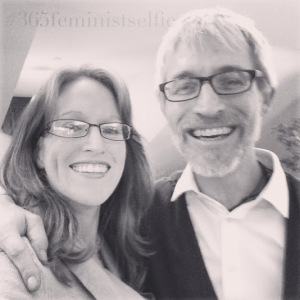
I still felt like a fraud as I tuned in, there amongst the "real" creatives doing the work to become "real" authors. But over the next hour, I was filling my journal not only with Jeffrey's practical advice, but with scraps of plot and character names and ideas about the bigger themes that my novel needed to explore.
Sovereign Reality, the trilogy of novels, became real to me. And the entire concept of “sovereignty” began to take shape as the backbone of my professional work.
On that summer afternoon, I stepped on to the path. I had a work in progress. I was going to be an author. I had a new perspective on my dreams and what I had to offer to my business.
I really was a creative entrepreneur.
Making the Commitment to Creativity, Story, and the Book that Matters
By October of 2014, I found myself surrounded by a select tribe of Jeffrey’s dedicated writers at the Your Brave New Story Authors’ Intensive at Mohonk Mountain House. Immersed in my story and the importance of my compatriots’ books, I felt every bit as alive and fearless as I did in those blissful moments after childbirth - even though I was only at the very beginning of my fiction writing journey.
 That's the thing - writing a book is a journey and you need a tribe and you need a guide to support you. Jeffrey offers that all year long through various programs and consultancy options, but especially with the Your Captivating Book mentoring program.
If this really intrigues you, email me - act by April 30 and I can get you a special discount and maybe even a free initial consult with The Book Papa himself.
One final reason to think about writing that book that has been holed up inside you and to do it with Jeffrey's help: he's about more than just books and authors... He is distinguishing himself as a major voice for doing business as UNusual and speaks directly to the needs of the business artist, AKA, the creative entrepreneur.