

BLOG
The Entrepreneur’s Guide to Honoring Writing Deadlines - Even During Spring Break
The Sovereign Standard, Issue 9

Sometimes you have the luxury of staring at a blank page. An endless desert of time stretches before you but you can’t think of a single useful thing to say.
For the creative entrepreneur, the opposite is often true: so many ideas, so little time.

Business owning parents in particular know this uncomfortable phenomenon during school breaks - those trying periods when life stops for the kids but everyone else in the professional world is still pushing full speed ahead.
I’m writing this on a coffee table on Cape Cod, relying on the patience of grandparents who’ll play one more game of Candy Land while mama just finishes another paragraph.
The Entrepreneur’s Survival Tools: Writing. Balance. Reciprocity. Self Care.

It’s in the mix of these powerful, sustaining habits that I’ve found my way through this week of delightful disruption and business as unusual.
Writing, balance, reciprocity, and self care overlap and feed one another. I believe that if you honor each in their turn, you have a fighting chance of meeting the end of each day with a sense of “I am enough.”
Writing
Remember, your writing practice is meant to give back to you.
You’ll only sustain the practice and imbue your words with meaning if you’re motivated by something deeper than the dictates of the editorial calendar and the need to churn out one more blog post.
Writing is an opportunity for personal and professional growth. The practice will support you when the world seems to be falling apart due to personal crisis - or simply because the children are hanging about, using the dreaded “b” word. (Is “bored” a four letter word to you too?)
For me, writing is a refuge.
If I didn’t have my writing deadlines, would I carve out any time for myself? Between the great processions to the beach (dressing for the wind takes more time than we actually spend by the water) and the endless task of keeping the toys off my folks’ stairs, it seems impossible even on "vacation."
Truth is, I almost always need “work” as an excuse to step away from my parenting responsibilities. I value self care, but often as an unattainable grail.
Self Care
The goal is to practice self care rather than just celebrate it. I'm still a work in progress in the implementation, but I am great at the research. That’s why I’ve been immersing myself in Koren Motekaitis’s series of podcasts with Jen Louden. I highly recommended a binge listen if you’ve got some long distance driving coming up!
For a quick dose of Jen’s medicine, watch this video on the self care paradox. I love how she describes the need to cultivate a relationship between “savoring and service.”
Because really, as important as the writing and all the other work commitments are, this is a special moment in your family’s life - or it could be. And taking care of work at the cost of your happiness as a mom means you're breaking a fundamental rule of self care.
We still reminisce about that April vacation in Washington DC in 1987. There’s no way my daughter will remember “the spring break mom sat at the computer” since that looks a lot like every other week of her life.

Balance & Reciprocity
Many say that work-life balance is a myth. If your expectation is that you’ll give exactly the same amount of time and energy to business and family and that this will keep everyone happy, it is a myth.
But the goal isn’t making everything 50/50 all the time. The goal is to give and receive in equal measure across the entire continuum of your life.
Lany Sullivan and I explore what reciprocity can really mean in your life and work in a recent Reach Connec Uplift Women interview. So much more than “I scratch your back, you scratch mine” transactions, it is about relationships and self care and connecting based on mutual recognition of worth.
During that conversation we also refer to “ayni,” the Andean concept of sacred reciprocity. Eleanora Amendolara describes ayni in depth so you can embody this profound sense of equilibrium - internally, in relationships, and with the earth itself.
Good Medicine: Writing, Self Care, Reciprocity... and Support
My stepmom kindly recommended I take off my coat and get some work done while she took the kids for a walk.
Clearly I was exuding deadline stress, and I risked infecting everyone around me.
How could I be surprised that I couldn't get clear on my writing and I felt choked with "bad mom" guilt? I wasn't asking for the dedicated creative time I needed and so I was spreading myself too thin as I tried (and failed) to dot it all.
I felt like a fraud, offering advice from and “I’ve got this” pulpit when I was actually just being a terrible, distracted house guest with a couple of needy dependents.
Gratefully, I took that gift of thirty minutes free of mom responsibilities to check back in with my real message, my lived experience, my own imbalance.
I think I found a story worth telling and I drafted a new container to tell it. And then I discovered the space to walk to the beach with my girls - twice.
3 Ways to Honor Your Writing Commitments & Other Deadlines During Times of Delightful Disruption (The Practical Guide)
- Take the pressure off by featuring a guest post on your blog
 I’m honored to feature Karen Brody’s Exhaustion: It’s Time to Tell a New Story this week.
 - Go back to the well: rework and repurpose past posts Because I’ve written posts on reciprocity and self care recently, I worried about insulting you with rehashes of the same topics. Thing is, I didn’t remember exactly what I had written, so how could you? In writing this today I realized how writing, balance, reciprocity, and self care are my signature topics and these explorations are just the beginning. What can you learn about your own work by examining and amplifying material from your archives?
- Keep it simple: think in lists, not in prose This is “do as I say, not as I do” advice today. What was meant to be a quick list of how to keep writing even with kids underfoot ended up becoming much more personal and involved than I had expected. But, if you can enter your next disrupted work week with a perspective on how you’ll integrate writing, self care, balance, and reciprocity, maybe you’ll be able to give yourself permission to write something quick, dirty, and helpful to your readers. After all - if you’re busy with kids underfoot, isn’t there a good chance they’re in the same boat and are also short on reading time?

Bonus Tip for Honoring Your Writing Commitments
Call on your writing coach for extra support. As a writing coach, I’m not a ghost writer who’ll put together a post for you, but I can help you plan your editorial calendar so you’re not working during your vacation. I can also help you implement the ideas in this post so you can develop a writing practice that truly serves you and your business.
Learn more about my writing coaching services.
5 Steps to Reclaiming Your Writing Practice
The Sovereign Standard, Issue 8
A creative entrepreneur’s editorial calendar can be her salvation. Making a commitment to generate ideas, get the writing done, and put something in front of an audience signals to your community (and your brain and your spirit) that you’re fully invested in this work.
 But, then again, a writing plan can just be a spreadsheet full of punishment and guilt. If you can’t seem to work the plan and meet your deadlines, does it mean you don’t truly care about your business or the people you serve?
Of course not. But when you’re blinded by the glare of the blank page or find every idea fizzles after two paragraphs, you start to panic. Especially when you’ve been on a consistent publishing streak.
You're thinking nothing short of a natural disaster should stop you from posting on schedule, but here you are, about to fail because you can’t find and stick to one halfway decent topic on an average Tuesday.
Step 1 for Reclaiming Your Writing Practice: Set Your Information Filters
The problem isn’t a lack of ideas. Most likely, it's an overabundance of information and possibility that has you stuck.
So, the first thing to do to vanquish writer’s block is to practice discernment about what sort of information you consume.
In Relax, Their Blogging and Marketing Advice Doesn’t Apply to You I offer a case for why you can tune out what the majority of experts have to say about content marketing - even if you’re dedicated to writing a blog in support of your business.
But then, once you’ve shut off the information fire hose, you’re left with the paradox: now that I finally have some quiet around here, I’m just going to add to the noise.
Step 2 for Reclaiming Your Writing Practice: Believe In the Writing Process
Is the ultimate cure for writer’s block simply killing the urge to write?
What if you convince yourself that producing more articles just adds to the chaos of the oversaturated digital stream? Then you can just walk away from the whole writing enterprise and congratulate yourself for reducing the information glut, right?
No. That’s not right.
There is no greater agony than bearing an untold story inside of you.

- Maya Angelou
Writing is medicine. Words want to make alchemists of us all.
To shape your flashes of insight and prayers of gratitude and revelations of joy into a message that someone else can understand… that is the great prize of the human intellect, the greatest expression of aliveness in this Age of Information.
Writing has saved your sanity more times than you can count, but you forget this. I forget this. And so we research a little more in order to avoid taking the cure that is just as bitter as the disease.
Why is it that when it's time to write we open Google Search instead of opening a Google Doc?
Step 3 for Reclaiming Your Writing Practice: Avoid Writing By Reading About Writing
 Proving that we need writing to sustain us, when I didn't want to write this week, I began to read.
Writer's block isn't hard to cure. Just write poorly. Continue to write poorly, in public, until you can write better.
He’s right, of course, but the path to success he describes is outlined in traffic cones. Like me, I am betting you were hoping for velvet ropes or a seashell strewn path.
So turn to Kelly Galea who offers the same idea but prepares you a soft writer’s nest with the perfect writing implement and a beloved journal.
Just express yourself. Just BE. So simple, really. Again, are you wondering where these thoughts and words are coming from? This pen. How is that for an answer? The pen is an instrument … YOU are an instrument. Be used to express this collective consciousness in YOUR voice – your unique voice, the voice someone (MANY someones) are waiting to hear, to call them forth, to bring them home. Lead them, guide them, help them, inspire them, teach them. Give them hope. Give them love. Give them that spark. Give them compassion for themselves.

Kelly got me cozy, but I might just burrow into that nest she crafted with her words and never write a thing, so I look to Jeffrey Davis to get me moving.
In Jeffrey’s Post Ecstasy Laundry List he addresses the inevitable come down after a peak creative experience, but much of this advice applies to you if you can’t imagine feeling creative ever again.
He’s telling you to keep writing too:
Make mistakes. The only catastrophic choice a writer makes is not to choose. Whether it’s genre or working story arc or angle. Show up. Get messy. Hit dead ends. Flounder. That’s part of the quest.
Step 4 for Reclaiming Your Writing Practice: Assimilate Rather than Create
I allowed myself one more click before I told myself I would just walk away from the desk and pray for inspiration over the next diaper change (after all, it’s in moments of rest and boredom that the real answers flow).
Then I discovered Karen Brody’s work. Great goodness! She’s an expert in the struggle exhausted, depleted women who inspires you to change your way of being: “Because your life needs you fully charged.”
 Life needs you fully charged, and so does your writing practice. Addressing writer’s block by staring at the page is like passing someone a Kleenex to cure grief.
Karen offers 9 insights into the art of being well-rested, and it's barely a stretch to apply each of these to the “I have no idea what to write” lament. My favorite:
Welcome Everything. Think of all the hours you live in an either/or mentality. Real transformation comes when you can drop the false idea that you’re separate.
Apply this approach to your daily life, welcoming every experience as a potential inspiration for your next blog post or article.
Step 5 for Reclaiming Your Writing Practice: Practice Compassion
Bless you and your commitment. All hail your editorial calendar that can. You keep rocking that publishing streak.
But remember that your writing practice is meant to give back to you.
The hours you put in aren’t just in service to another post, another snack for the voracious internet marketing beast.
Your next post is a distillation of your presence in your life and in your business. It is a message from the heart of your work to the heart of someone who needs your wisdom, encouragement, or strategic advice.
The people who matter - the people who want to be beguiled and convinced and changed by your words - they don’t want you to look at a blank page gone blurry with tears of frustration. If they must, they can wait til next week.
And so can your spreadsheet.
But before you give up and beat yourself up:
- tune out the extraneous noise
- remember why writing matters to you
- seek wise counsel
- be present in the moment, and
- be kind to yourself
I can’t wait to read what you'll write next!
This post was sent to Sovereign Standard subscribers first. To join our community of readers and contributors, please subscribe here.
Relax, Their Blogging and Marketing Advice Doesn’t Apply to You
 It’s your business to make life more beautiful, bearable, or bold for a select group of people.
You want to be more visible, telling your brand’s story and your own stories. Launching a blog or devoting yourself to a regular business writing process on your current website is the right decision.
It’s your business to make life more beautiful, bearable, or bold for a select group of people.
You want to be more visible, telling your brand’s story and your own stories. Launching a blog or devoting yourself to a regular business writing process on your current website is the right decision.
Here’s the first thing to do: stop listening to advice for bloggers.
Tune out the smart, reputable marketing experts with their experience and convincing facts and figures.
They’re not talking to you.
(And, of course, you also want to stop listening to the “get rich quick” business gurus, but you already knew that.)
But back to those intelligent, compelling marketing marketing minds and what elements of their advice you can ignore...
You’re Not the Every(wo)man Blogger
About 15 - 20% of Americans are involved in entrepreneurial ventures.
A large proportion of those individuals make utilitarian products and sell everyday services like septic tank maintenance. Most of those companies rely on old fashioned advertising to find new buyers.
There’s a smaller slice of the self-employed population that will experiment with content marketing and launch a blog or develop other types of media to educate and entertain and entice new business.
Though they’re surely speaking to marketing officers at larger corporations too, the majority of the blogging and marketing experts are pitching their message at this group of "traditional" business folks.
Since you’re an entrepreneur interested in creating content, you’ll want to listen to the same podcasts and consume the same articles as the car salesmen and the electricians, right? After all, there are business fundamentals that apply to everyone, don't they? You can just filter out the bits that don’t fit your ideal clients.
No.
 Stop filtering as you listen! There's too much noise in your life already.
Move on immediately when you realize the speaker isn't talking to you. Find someone who is. They're out there and they want to address exactly what you're concerned about.
Good Marketing Advice That’s Not For You
Demian Farnworth is Copyblogger’s Chief Content Writer. As part of the company’s brand new podcast network, Demian hosts a show called Rough Draft. Here’s the pitch: “ If you’re a pure writer, and you wonder how you’ll be able to build your own online platform that actually gets seen, this show is your shortcut.”
I’m not exactly sure what a “pure writer” is, but I guess I’m not one of them and I don’t believe the creative entrepreneurs in my circle are either based on the recent episode, “An Idiot-Proof Guide to Writing Blog Posts That Google Loves.”
Demian is doing his listeners a great service as he describes the current state of SEO and debunks some of the myths around what’s often seen as a secretive world - if not a downright dark art.
He uses some well-known examples like eHow.com (hint: when the examples someone uses have absolutely nothing in common with your goals, approach, or audience it’s often a sign the advice is not for you).
And then he describes a Google’s engineer’s description of a high quality site comprised of more than twenty questions including:
- Does the article provide original content or information, original reporting, original research, or original analysis?
- Was the article edited well, or does it appear sloppy or hastily produced?
- Is this the sort of page you’d want to bookmark, share with a friend, or recommend?
- Is the content mass-produced by or outsourced to a large number of creators, or spread across a large network of sites, so that individual pages or sites don’t get as much attention or care?
- Would you expect to see this article in a printed magazine, encyclopedia or book?
I know your answer to every one of these questions.
I also know that you wouldn’t consider any answer other than your own to be acceptable - not of you’re going to put your good name on it and expect it to draw in the high caliber prospects that you’ve created a business to serve.
Now, there is nothing wrong with this advice. Until recently, the Web was a Wild West where tricks and gimmicks were just part of doing business. There are many people who need to hear Demian's info - including some conscientious, hard-working business people led astray by nefarious SEO “experts” who profited off of link farms and other low quality sites.
But since you’ve never considered buying content from a low value, low cost supplier and since you always strive to write pieces that are worthy of publication in a magazine your audience loves and trusts, why would you listen to this kind of advice (other than to feel superior to the swindlers and the nice guys who were duped)?
What Sort of Marketing & Business Advice Does Apply to the Creative Entrepreneur?
Who is your ideal marketing and business resource? The cop out answer is also the truest answer: “you’ll know 'em when you hear 'em.”
Develop your own powers of discernment and perfect your own filters so you can identify when an expert deserves your time and attention.
In order to have that kind of discernment you need to be clear on your own identity in the marketplace as well your own goals and needs. Know your own creative entrepreneur’s autobiography and what brought you to where you are now as a business owner and as an individual.
If you’ve never done business as usual, don’t judge your past or plot your future with one size fits all business advice.
If you were a vegetarian you wouldn't buy the #1 best selling guide to cooking spare ribs. As a creative entrepreneur with a storyteller's soul, don't get bogged down by advice for people who've tried to scam their way onto their audience's computer screens.
When you know and own your own entrepreneurial story you’ll become more comfortable with clicking away and searching out a more relevant resource when someone is blazing a path through “doesn’t apply to me" territory.
Don't Judge an Expert By One Piece of Content
Even if there's a seemingly limitless supply of marketing resources out there, you don't want to abandon relevant thought leaders because every statement isn't customized to your exact interests.
Without singling out Demian Farnworth too much, I want to be clear that I have listened to each episode of his new show and have found some great information mixed in with the stuff that doesn't need to be on my radar. In a previous Rough Draft episode on keyword research, Demian asks:
Will anyone read the online content you produce?
It’s a terrifying question, but an important one. If you’re committed to building a popular and profitable site, you’ll have to write, read, and talk about your topic almost every day for the next several years. You’ll invest thousands of hours, quite literally gambling with your time.
The question is, how will you approach it? Will you start writing and hope someone notices you? Or will you carefully research your niche, looking for the precise angle and language that will make your content irresistible?
I recommend the latter.
This statement - though yes, terrifying - speaks to the creative entrepreneur because it’s true of everyone on a quest to build a business through content marketing.
 And yet, he also reminds us of the importance “niche.” Just as you want to be sure to identify your own niche so you know how to speak to your audience, you want to be just as clear about whether you fit in a content producer's tribe.
Be a magpie, pulling inspiration from across the web, but also be choosy. Be willing to abandon any bit of information that doesn’t contribute to the knowledge base you’re seeking to build.
The Sovereign Standard is a publication that collects multiple perspectives on topics that are relevant to the creative entrepreneur. Subscribe for free here.
And if you're looking for writing help that is honed specifically for the needs of the creative entrepreneur with a storyteller's soul, I invite you to think about how I can help you get your ideas into a post that speaks to your ideal reader and client.
Why Myth Matters to Your Writing and Marketing
We need myth. We always have, and we always will - if we want to retain our humanity.
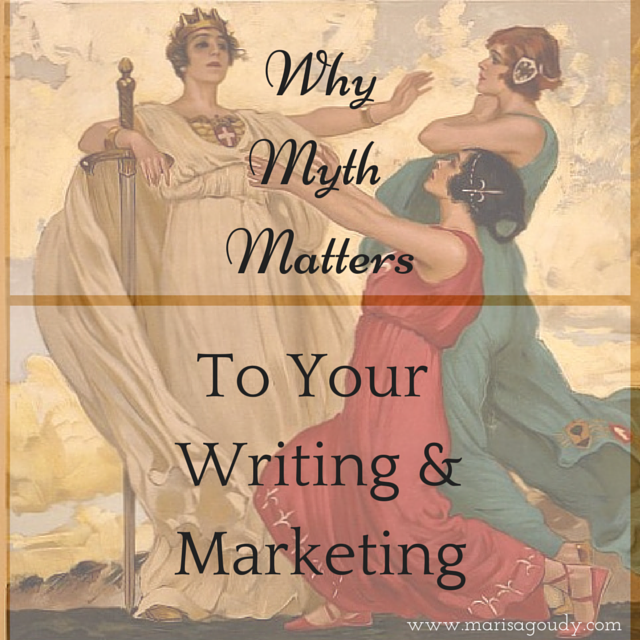
Called “a roadmap to the human psyche,” myths exist to explain the big questions like “for what reason was I born?” and “what will happen to me when I die?”
Myths lay out pretty clearly what is on the human smorgasbord: what we want, what we fear, what we would like to have, what we would very much not like to have. Those human fears and human desires really have not changed, and they're reflected in the myths that have been with us for a long time.
--Margaret Atwood
Myths are also indispensable when it comes to less existential matters like creating a Hollywood blockbuster, writing a novel, and assembling a marketing plan.
The Myth that Everyone Knows: The Hero’s Journey
The Hero’s Journey as originally framed by Joseph Campbell is something of a cultural standard these days, particularly for storytellers.
Turns out, “everyone” wasn’t always aware of this great twelve part cycle until Christopher Vogler brought it to Hollywood’s attention in the mid-1980s (at least that’s how he tells it). Of course, it was hiding in plain sight as George Lucas’s Star Wars had already transported us to a galaxy far, far away and transformed movie hero-dom forever. (Later, John Wayne, we've got a farm boy with a character arc!)
Vogler offers great advice on following the Hero framework when crafting a story (this also applies to any attempt to lay your ideas over someone else’s framework):
As with any formula, there are pitfalls to be avoided... The hero myth is a skeleton that should be masked with the details of the individual story, and the structure should not call attention to itself. The order of the hero’s stages as given here is only one of many variations – the stages can be deleted, added to, and drastically re-shuffled without losing any of their power.
The myth is infinitely flexible, capable of endless variation without sacrificing any of its magic, and it will outlive us all.
(While you’re brushing up on the basics of the Hero’s Journey, do check out the summary of the Heroine’s Journey by Maureen Murdock too… I know I’m intrigued.)
The Hero’s Journey through the Marketplace
The hero's story is is a human story that speaks to us on multiple levels. At its best, the Hero’s Journey can connect people with resources that will better their lives. At its most banal, it can be used to make people buy stuff.
First, the “what NOT to do” example.
In Brand Storytelling: 10 Steps to Start Your Content Marketing Hero’s Journey, you’re guided through “The CM Brand Hero’s Journey."
Stop. Right. There.
Develop a marketing and content strategy with you or your brand in the hero’s role and you’ll alienate those who really matter to the story: the people who invest in your work and use it to change their own lives.
The brand is not the hero, just as the writer is not the hero. In case you forgot, Pamela Slim will remind you: It is not about you.
Lest we get sidetracked, deriding those evil marketers who cheapen and co-opt everything, there are clever, useful, sensitive ways to apply this wisdom to business.
Copyblogger’s Brian Clark masterfully re-envisions the role of the brand in the hero's tale: the magical mentor.
The mistake most often made in “marketing” is thinking of your business as the hero, which results in egocentric messages that no one else cares about.
The prospect is always the primary hero, because they are the one going on the journey — whether big or small — to solve a problem or satisfy a desire.
Another reason to tune in to this New Rainmaker podcast: Echoing the cyclical nature of the hero’s journey, you get a new perspective on the funnel: the concentric circles of belief. (If you're excited by the Heroine's Journey this "feminine" diagram of the sales process may really appeal to you.)
A New Mythic Model for the Magical Mentor
Brian Clark employs two of our most beloved mentors to illustrate his point: Obi Wan and Morpheus from The Matrix. You know these guys. You'd trust them if you were chosen to save the world.
Here’s another option that hasn't hit the multiplex: the Sovereignty Goddess.
As I describe in my St. Patrick’s Day post, 5 Lessons on Writing and Entrepreneurship from an Irish Goddess, the Celtic Sovereignty Goddess plays a vital - though fleeting - role in the creation of the hero. She owns her magic and never stresses about playing second fiddle.
“Just” having a supporting role in the hero’s journey is actually what being a storyteller or running a business is all about.
This introduces the paradox of the hero:
We don’t need another hero. Everyone is a hero.
You’re most effective when you realize you’re not the hero of the piece you’re writing or the business you’re running. And yet, you must remember you're the hero of your own story.
The Hero’s Quest: Be of Service
“The hero’s journey is to be of service”: that’s Lisa Engel’s “ah ha” statement at the end of this episode of The Jess, Scott, and You show, “In the Service of Others.” (I had the good fortune to be a guest on this particular show too.)
Though it’s true that it’s not all about you (here, Susie Moore explains why that is such a good thing), you are also on your own quest. You must practice self-care and act from self-love and self-interest in order to grow and meet your potential (we discussed that at length on the show).
You'll never prove your heroism through an egotistical romp aimed showing off your skills and authority. Instead, you become the hero through a willingness to imagine, learn, endure, transform, and then bring the magical elixir home.
Who are your heroes? How have you been called to take on the role of the hero? And what has that taught you about who is really in charge? Leave a comment or tag me with the answer on your favorite social media platform.
What do your readers expect: wisdom or knowledge?
The Sovereign Standard, Issue 6
At a time when information is increasingly cheap and wisdom increasingly expensive, this gap is where the modern storyteller’s value lives.
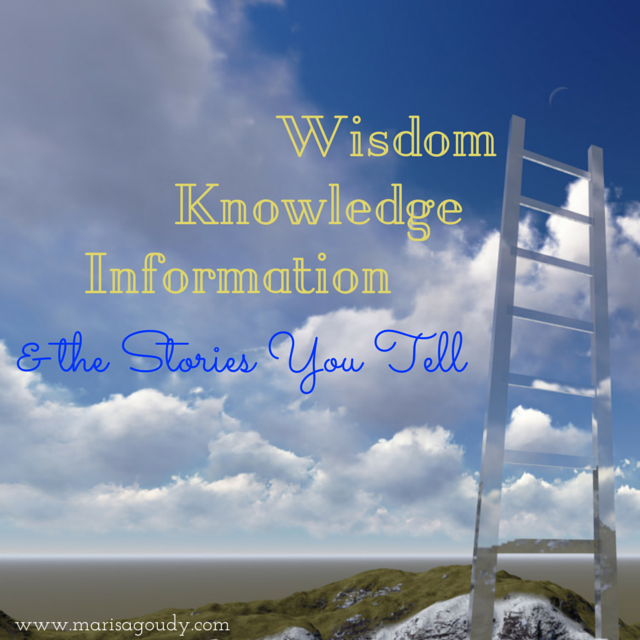 For this week’s Sovereign Standard, I was tempted to just send a link to Wisdom in the Age of Information and the Importance of Storytelling in Making Sense of the World: An Animated Essay by Maria Popova and introduce it “what she said.”
Even that title teaches you something:
Wisdom is foremost. Though we live in an Age of Information, the world doesn’t make much sense, but storytelling will help.
But, as these insights started lighting up my online and offline experience this week, I found there was something more to say. Is it wise? You tell me...
The Ladder of Understanding
Popova offers a brilliant metaphor: the “ladder of understanding.” (Turns out she’s applying Plato to our contemporary culture of noise.)
Information is everywhere - all those facts and figures and Wikipedia articles. Knowledge is the next step up - you synthesize all that information to “reveal some truth about the world.”
At the top of the ladder: wisdom. From this vantage point, you're sculpting what’s known into what matters. Through wisdom, Popova says, we understand not only how the world works, but we also present an aspirational vision of how it could work.
 Actually, she said “how it should work” but I do everything I can to avoid that word.
There are moments when we crave “should” - like when you go to a trusted advisor praying they'll tell you just what to do. (The best ones will do no such thing.) The problem arises when people who have not earned the right to give such advice start doing so. Brene Brown speaks masterfully about this.
Look at the “should” problem in the context of the Age of Information and the online world: so many people who are better suited to dole out information and facts are trying to jump a few rungs of the ladder. They are moralizing - and “shoulding” - before they have the credibility and experience to impart real wisdom.
What do you share: information, knowledge, or wisdom?
Examining the Ladder of Understanding , the thought-leader-in-process leaps up waving her hands “wisdom, wisdom! I wanna share wisdom!” (Me too, brothers and sisters, me too.)
Looking at my own position, I worry that I haven’t produced enough content, and I haven’t fully birthed my signature theme in a coherent, public way. Maybe I should (eek! “should”!) put a lid on all this blogging and just cogitate on the Bigger Story a while longer if I hope to offer up any worthy wisdom.
Thank goodness Tara Mohr talked me out of that. In this wide-ranging interview (the most compelling and useful one I’ve heard her give as she promotes Playing Big), she nails that tendency to hold back and over prepare.
Mohr invites you to squash that desire to do a little more research, training, contemplating. Decide “I know enough” and get out there to speak, to launch, to interact…
“Wisdom” May Not Always Be the Right Answer
 The chronic perfectionist and overachiever (is your hand raised for that too?) sees the top as the goal. If knowledge is only halfway up the ladder then it must not be good enough. And mere information? Ugh. That can’t be the realm of the creative entrepreneur.
But are we all supposed to be climbing the ladder to the tippity top to dispense wisdom like a guru on high? Is there room up there or will too many soothsayers make that ladder topple right out of the sky?
After all, we still need that basic “how to” content to help us in anything from baking a cake to formatting a WordPress post to the basics of blogging.
And there’s great merit in collecting and organizing ideas in order to let people make up their own minds. Moralizing has its place, but sometimes it’s important to merely raise awareness and trigger curiosity. Trust your reader to refer to their own internal compass.
This week on the blog I explored the choices we have as individuals and as content creators. Every time you sit down to write you get to decide everything from the tone to the ultimate call to action. Some days a list post, some days a story that gets to the heart of the big questions.
But When You’re Called to Tell a Real Story…
A great storyteller is the kindly captain who sails her ship with tremendous wisdom and boundless courage; who points its nose in the direction of horizons and worlds chosen with unflinching idealism and integrity; who brings us somewhat closer to the answer, to our particular answer, to that grand question: Why are we here?
Popova brings her message home by employing the storyteller who navigates the deep waters of wisdom. Certainly, this is someone we can all aspire to be. Maybe not today, maybe not in that very next blog post, but certainly there are moments when you’re called to tell a story that bigger and bolder than any you’ve told before.
Godspeed on that journey.
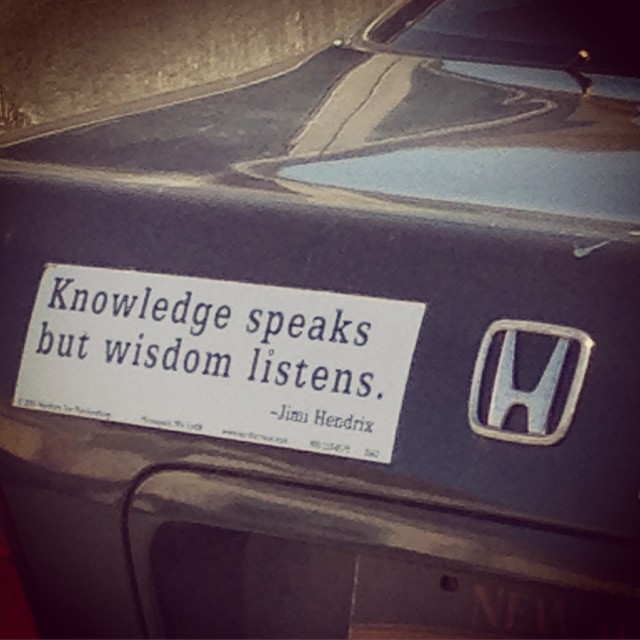 And yet, keep in mind what Mr. Hendrix said (or might have said): "Knowledge speaks, but wisdom listens."
In the giving and receiving of story and silence we reveal the deepest wisdom of all.
This post was sent to Sovereign Standard subscribers first. To join our community of readers and contributors, please subscribe here.